The guest rooms at the Norwegian Folk Museum have a long history and have origins that stretch back more than a hundred years. Before the building that now towers on the ridge by the stave church was erected in 1917, there was another restaurant at the museum.
"The Paris Pavilion" was the name of this building, and as the name suggests, the building had an international and somewhat special history. The Paris Pavilion was Norway's contribution to the World Exhibition in Paris in 1900. After the World Exhibition, the building was transported back to Norway and transferred to the new Folk Museum on Bygdøy. There it was opened in connection with the Cultural History Exhibition in Oslo in 1901 and was given the more Norwegian name "Gjæstgiveriet." This building was allegedly located on the museum grounds, in what is today referred to as Gamlebyen.
According to the Norwegian Folk Museum's yearbooks, it was problematic to find a suitable place to set up the "Gjæstgiveriet". At the site where the museum wanted to set up the building, the landowner had included a clause stating that there should be no "serving of Bavarian beer or other alcoholic beverages." The building therefore had to be set up in a location that was not considered entirely optimal.
Unfortunately, the Paris Pavilion as a whole was not to have such a long lifespan. It was demolished as early as 1911. The museum's first director, Hans Aall, justified the demolition by saying that "it proved less suitable for its use, and could not really be said to be an embellishment for the facility." There were rumors of excessive partying despite the clause on serving alcohol, and that may have been a contributing factor to the demolition.
After the "Gjæstgiveriet" was demolished in 1911, the "Sommerstua" in Østerdalstunet at the Folkemuseet was used as a dining place for a short period: "... a cozy Østerdals Guesthouse, where every Sunday you can get the most delicious Flødegrød and ditto Waffles."
A new restaurant was built around the same time on the hill behind the Main Hall in Oscar II's Collection. This was the origin of today's banqueting venue "The Guest Rooms at the Norwegian Folk Museum". According to sources, the land where the Guest Rooms stand today was purchased for 10,000 kroner by the Hukselskapet in 1902.
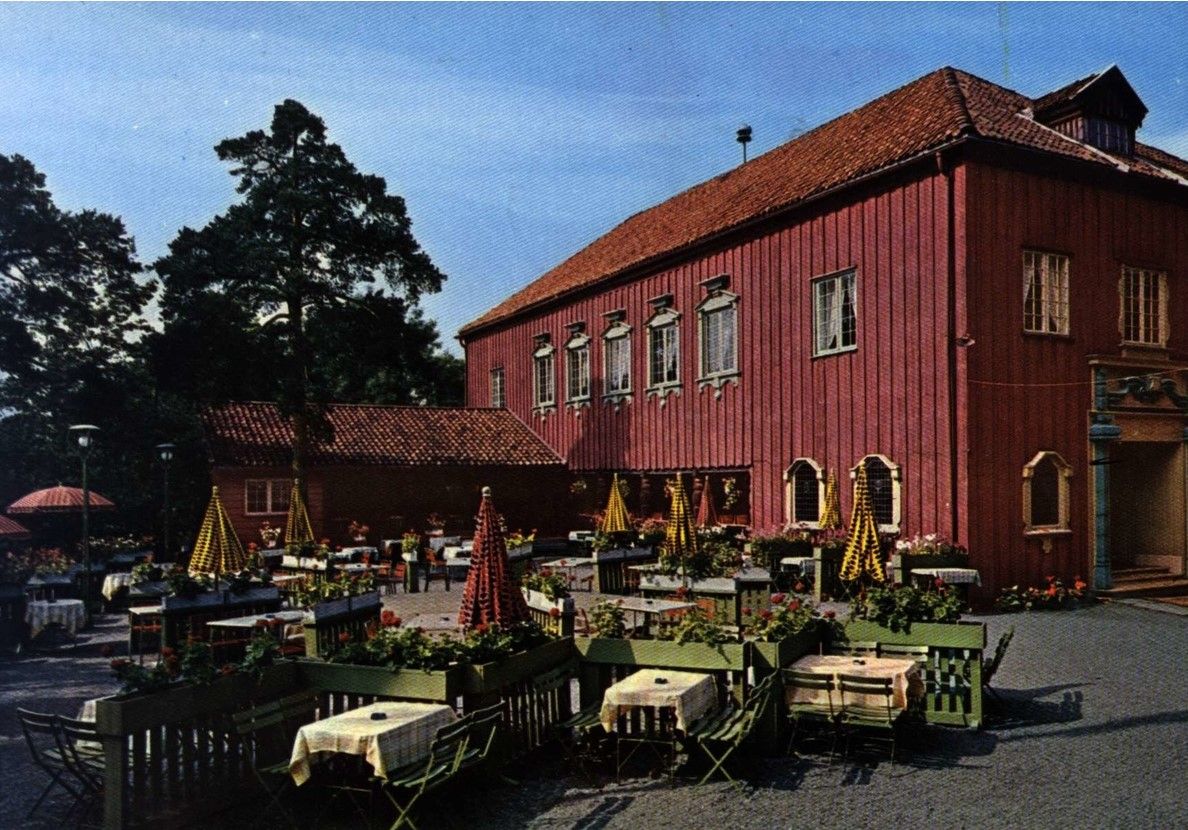
The guesthouse was completed a few years later and opened in 1912. Some parts of the Paris Pavilion were reused in this building, and today form, among other things, the veranda at the Guest Rooms. The new building that opened is described very positively in Dagbladet:
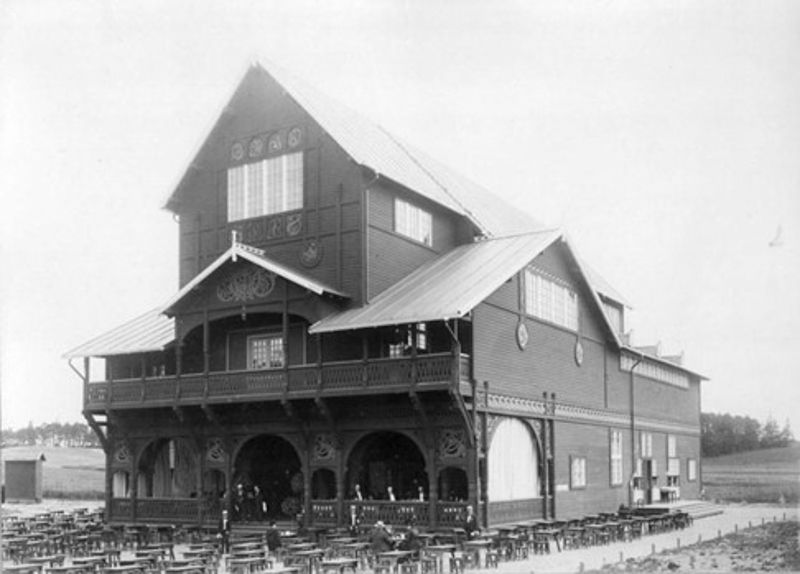
The Parisian Pavilion on the museum grounds in the years immediately after 1900. Note the posts and railing on the second floor. These building parts are still in use in today's banquet hall.
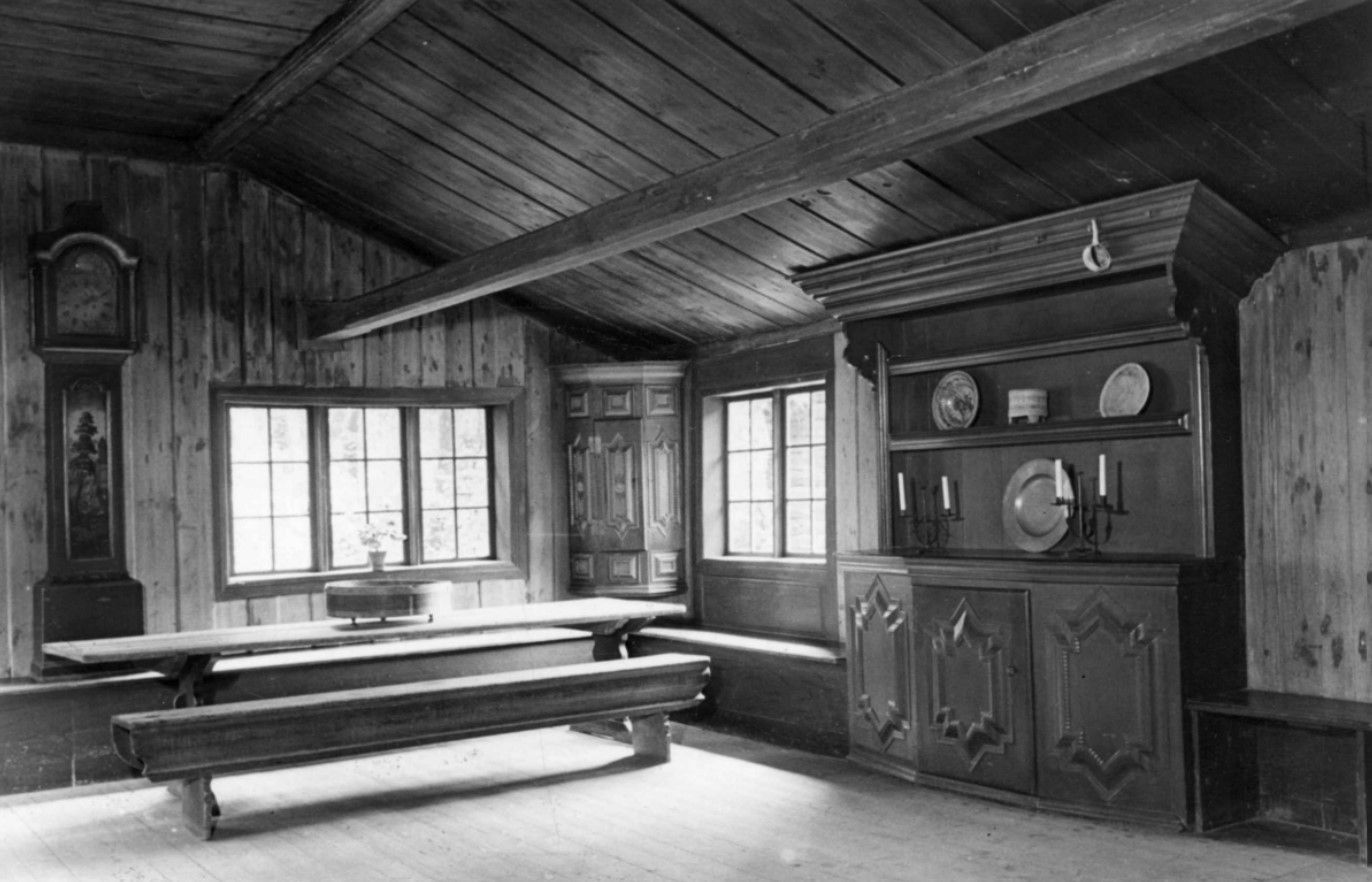
In the summer house from Kilde in Østerdalstunet, "flømedgrøt" and waffles were served on Sundays a hundred years ago.

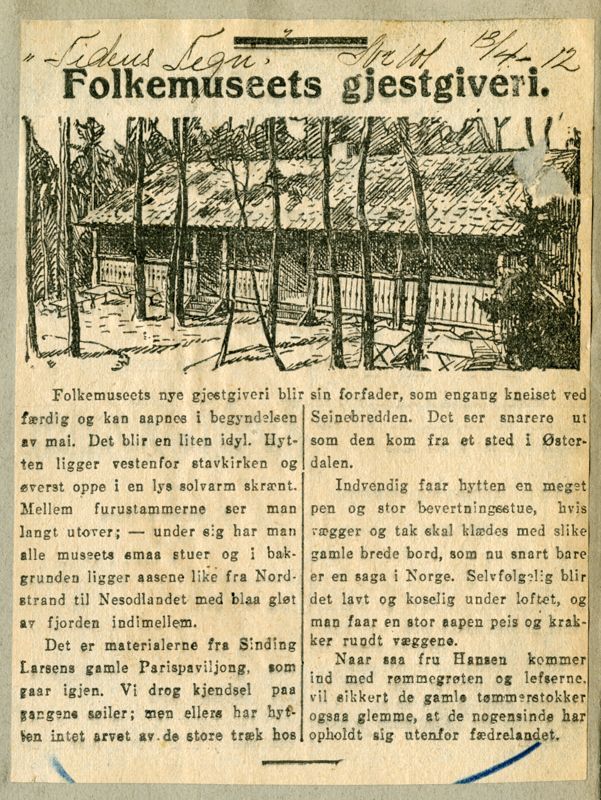
The guesthouse has a magnificent site, the best on the entire museum grounds, this particular site actually belongs to the state. It is located high and free in the pine forest with a view over the lower part of Bygdø and with a couple of lovely openings out into the fjord. The house itself is beautiful and simple, almost in a kind of Østerdal style, the interior is even and solid, the whole thing is neat and good and spacious. About 100 people can eat in the house and 200 to 250 on the rampart outside. The catering is rented by Mrs. Hansen, who previously managed Kaffistova for 8 years.
After just a few years, the restaurant became too small, as can be read in Aftenposten's review of the Midsummer Festival in 1916:
"The Folk Museum also needs a larger restaurant, both for visitors on Sundays and when many people gather there; but especially the next time a party is held. And if we are not misinformed, this question has already been raised by the right person, and it will probably be sorted out then."
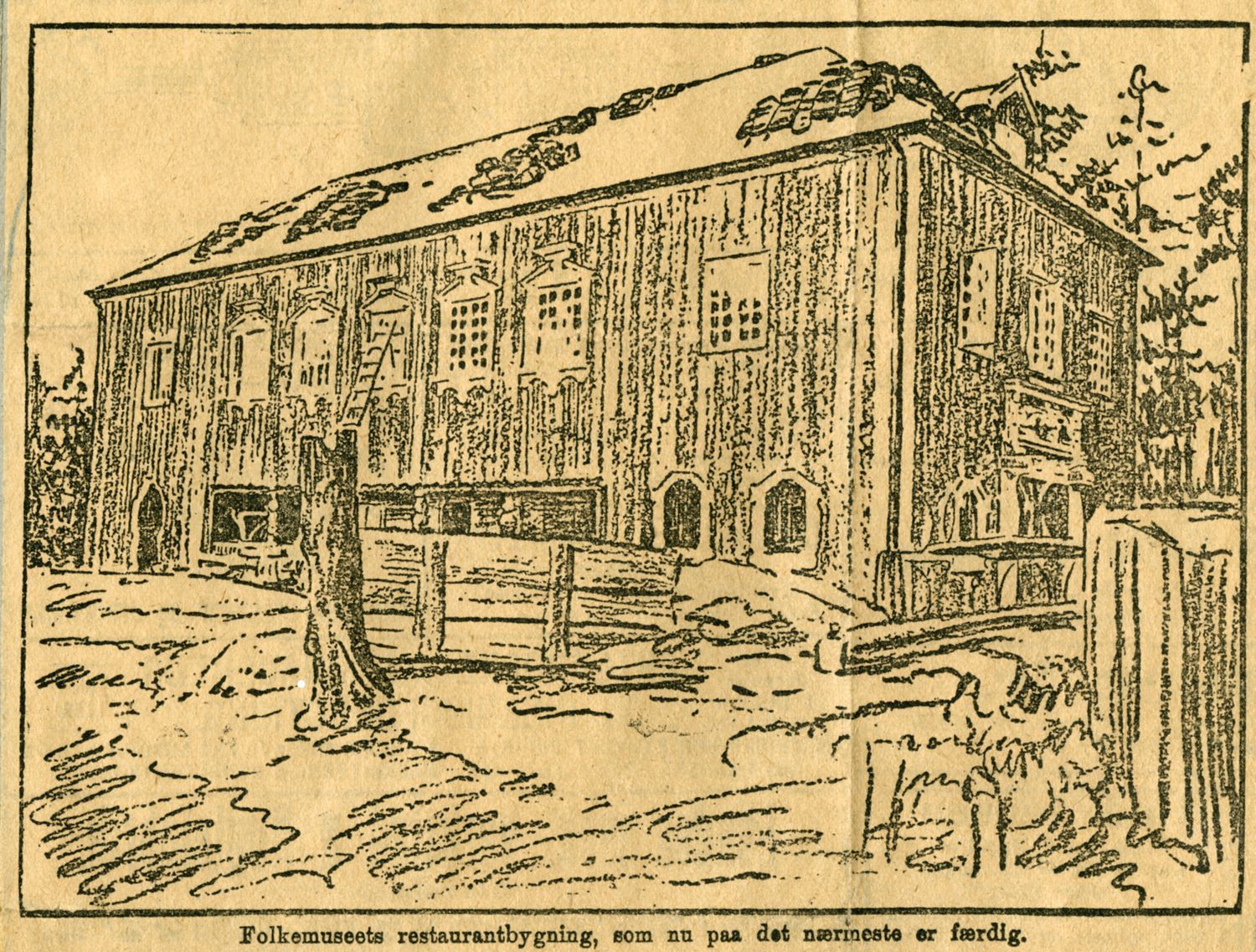
The restaurant was already expanded the next year. In connection with the Midsummer festival that year, one could read in Aftenposten that:
"The restaurant conditions at the Folkemuseet have improved significantly since last year, the restaurant has been expanded and remodeled and, like any other better restaurant, will also have its second floor."
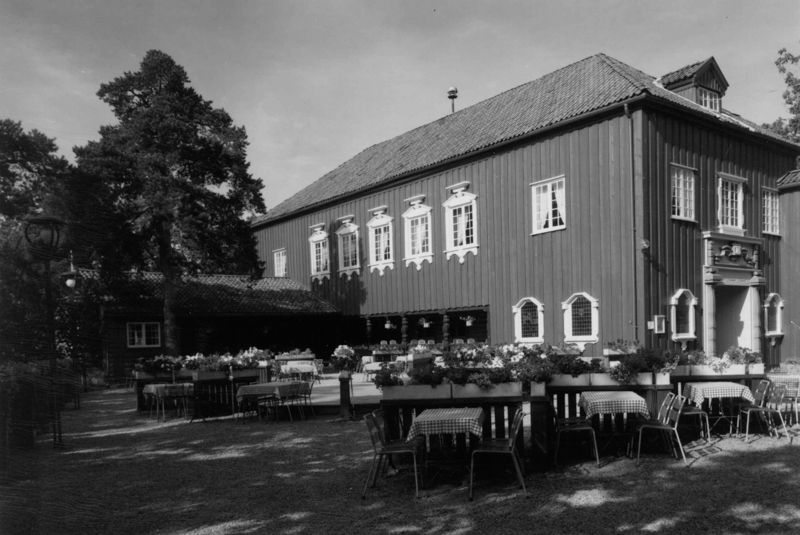
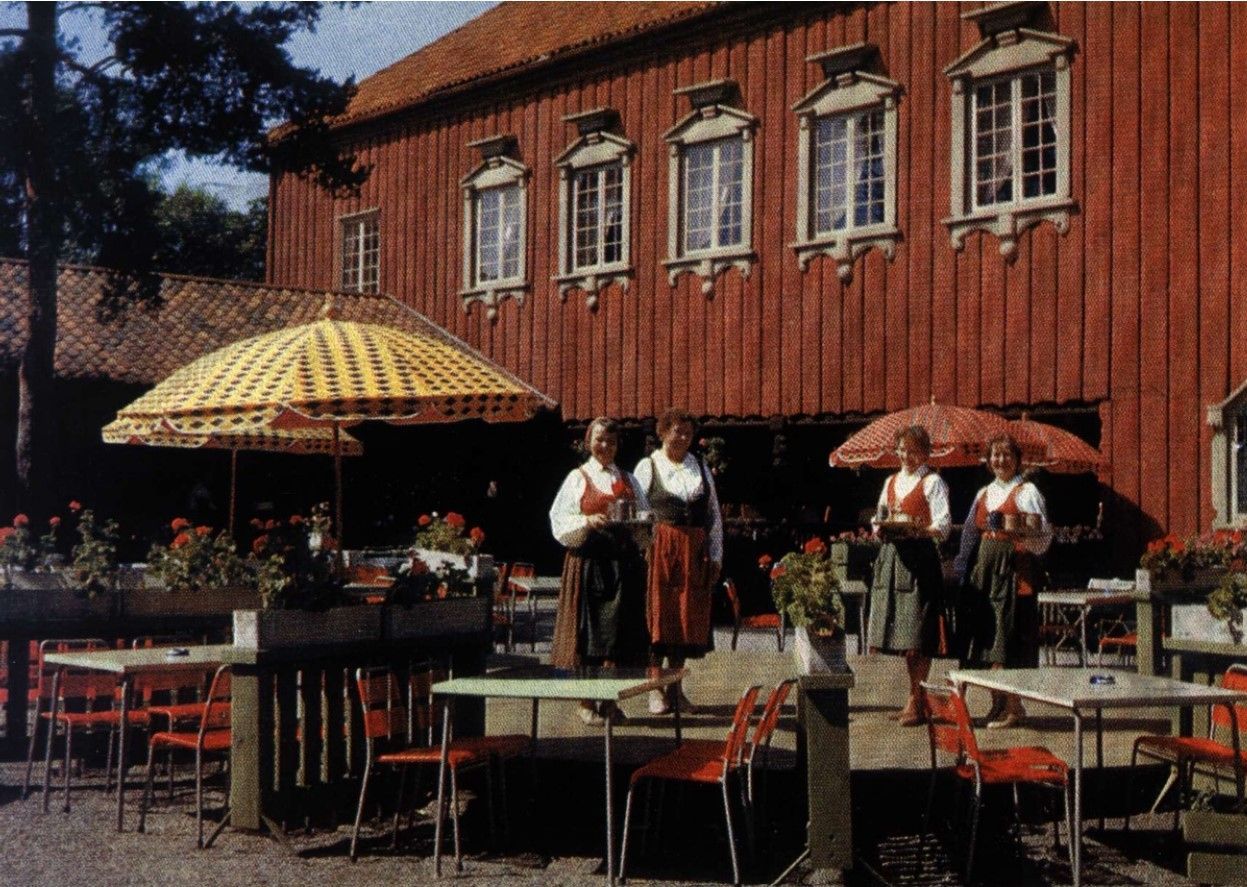
The architect Magnus Poulssen was commissioned to design the extension of the restaurant. On June 22, 1917, one could read in Morgenbladet that there had been an inauguration party. The new restaurant was built over and around the former restaurant. The living room on the first floor, which had Østerdalstunet as a model, was now called "Peisestua", while the large room upstairs was called "Salen".
And up on the hill between large fresh fir trees, the restaurant lies wide and safe like an old Norwegian manor house – the walls are grey with sulphite, the windows are small and made of lead and under the fireplace room a warm and pleasant corridor stretches. The building itself seems beautiful and simple, perhaps a little heavy, but quaint and stylish. It fits perfectly into the fir forest and the spirit of the Folk Museum. [...] The whole thing seems simple and stylish, old-fashioned, beautiful and Norwegian.
Morgenbladet June 22, 1917
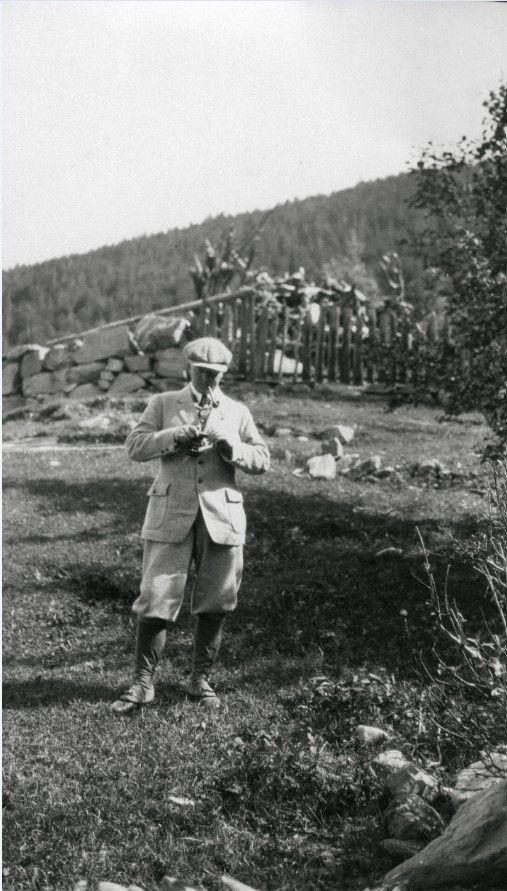
Architect Magnus Poulsson (1881 - 1958) was an avid outdoorsman and one of the foremost architects of his time.
In 1920, the Restaurant Building was further expanded to the south with the "Folkestue" located at right angles to the main building. To the north, on the mezzanine level, the "Blue Fireplace Room" was created, with hand-painted decorations in the form of the five senses that still adorn the walls today. Magnus Poulsson was also the architect for this expansion.
Architect Poulsson collaborated extensively with Arnstein Arneberg and designed the facade of Oslo City Hall with him. Later in his career, the architect's style became stricter and more functionalist. Rumor has it that he referred to the Restaurant at the Folkemuseet as "the sin of his youth" because of its national romantic style.
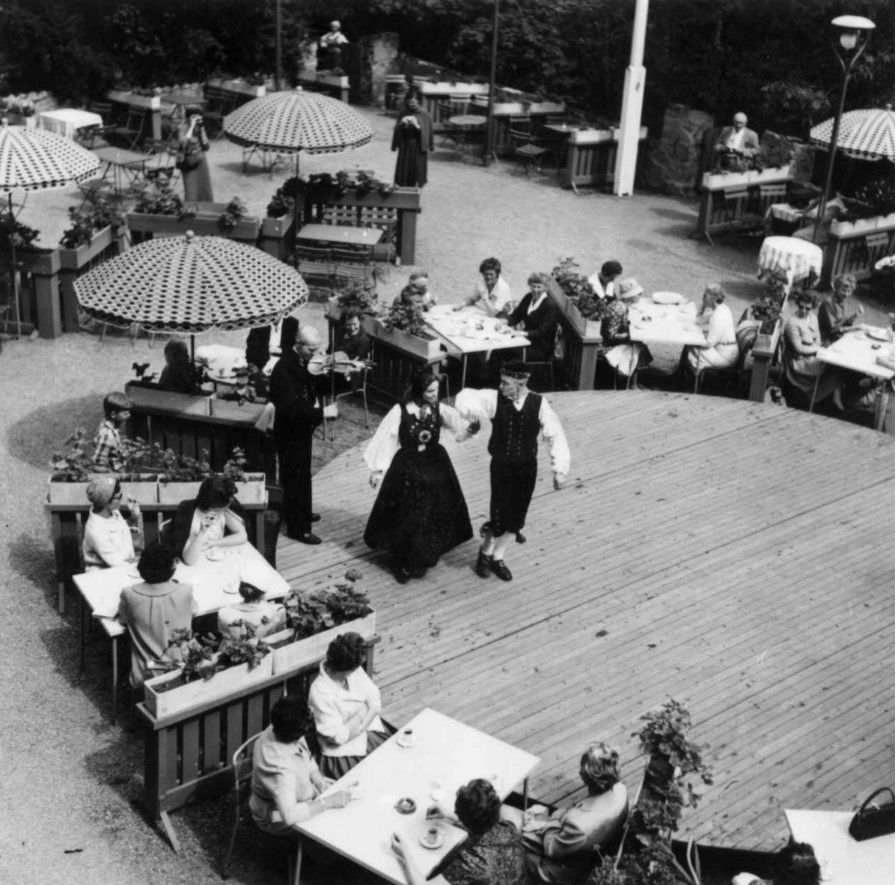
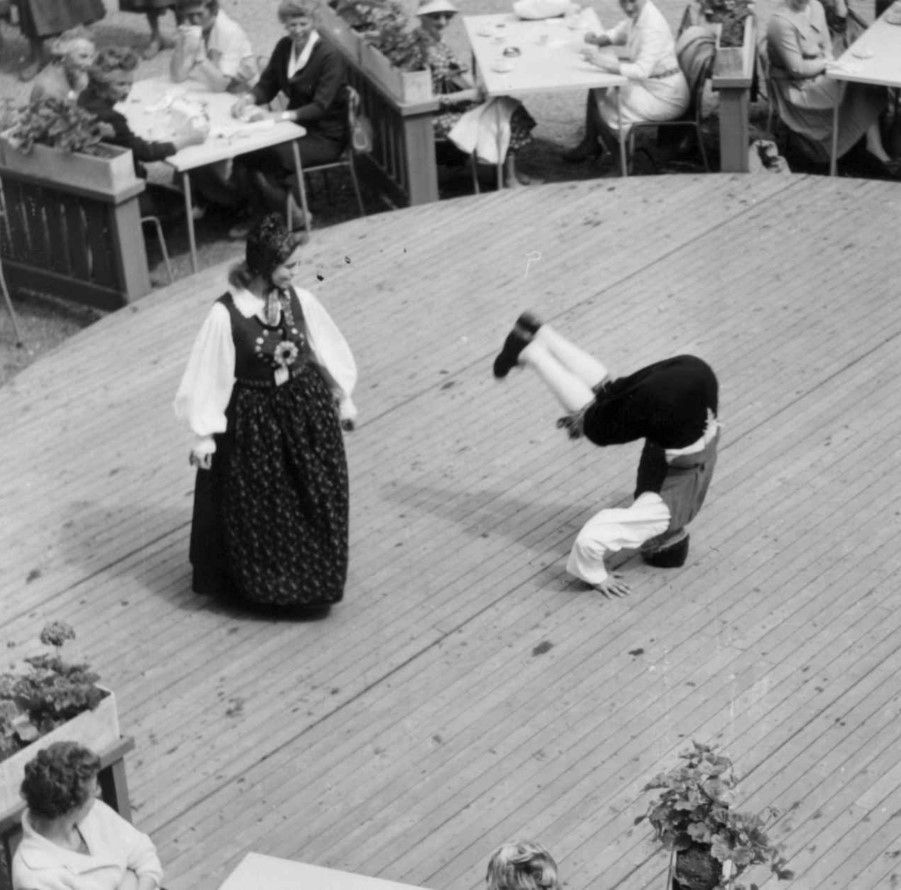
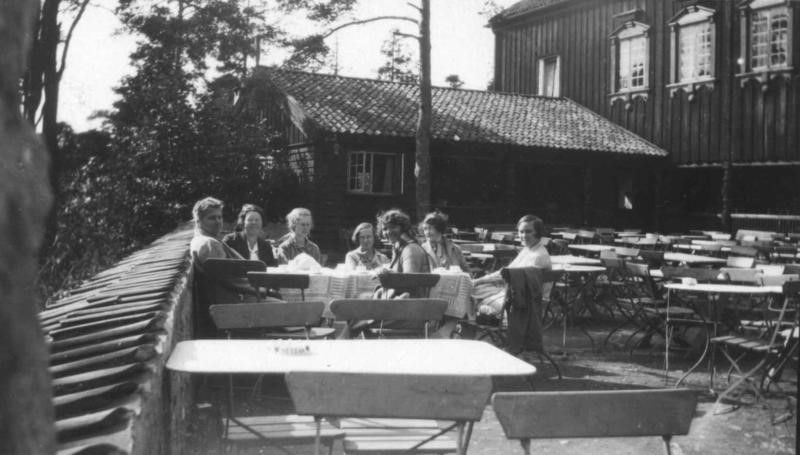
The restaurant building at the Folkemuseet was a great success. Private parties were held here, but the building was also used as the museum's visitor café, where those with a thirst for knowledge could take a break during their museum visit.
A special feature of the museum's restaurant building in the 1920s and 30s was the fact that anyone who wanted to eat there had to buy a ticket to the museum's collections before sitting down to eat. The entrance fee, 1 krone, was refunded when you left the restaurant, as long as you did not move into the collection area itself. This practice was so unpopular that it was debated in Morgenbladet, where many thought it was a bad habit, and that foreign tourists in particular could not understand such arrangements. The debate was entitled "What foreigners wonder about." Thankfully, the cumbersome practice eventually came to an end!
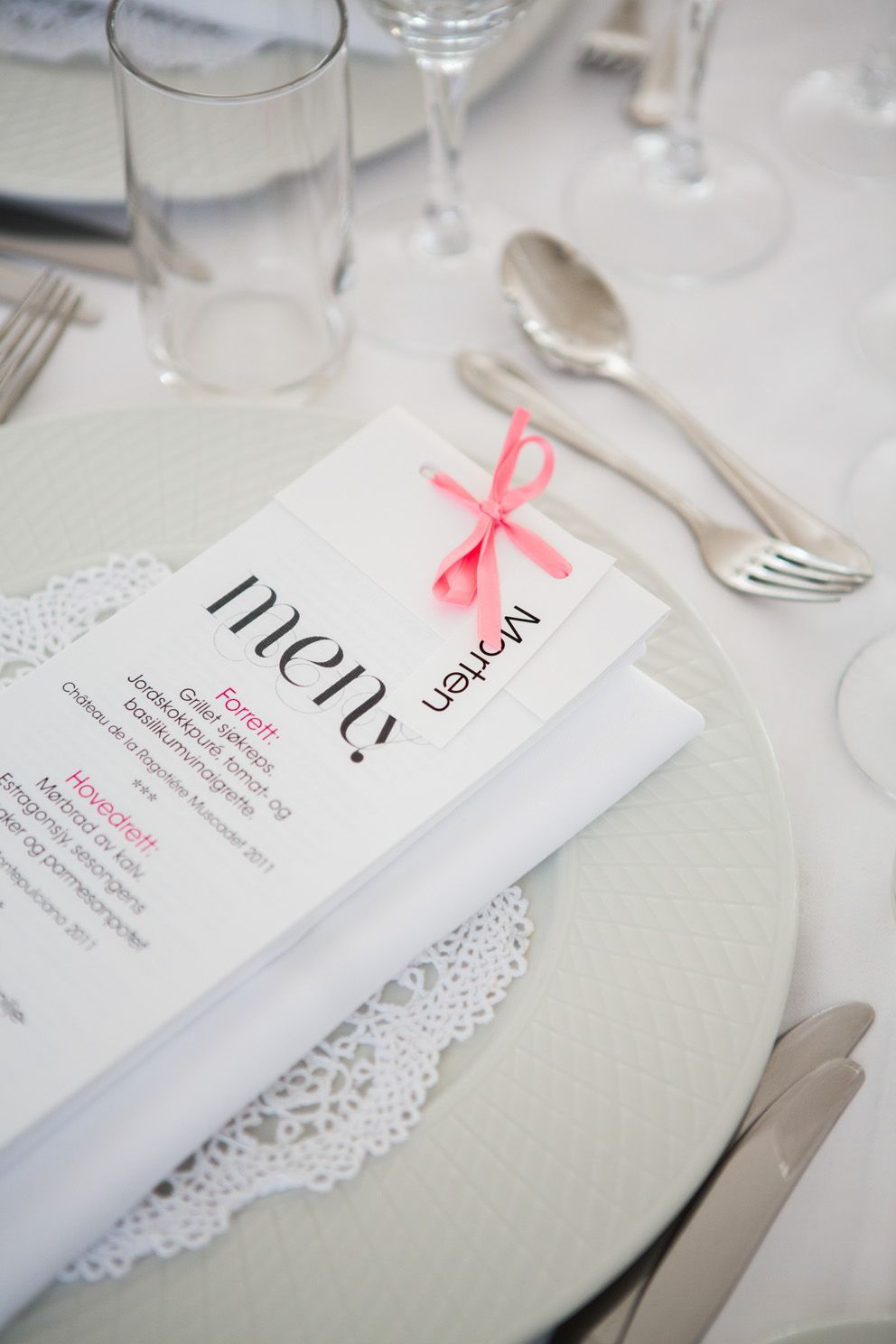
A preserved menu from the 1920s shows that at the time you could splurge on half a bottle of champagne from Victor Clicout, vintage 1926, for ten kroner and fifty øre. If you weren't so well-off, there was also Norwegian gooseberry wine for two kroner a glass.
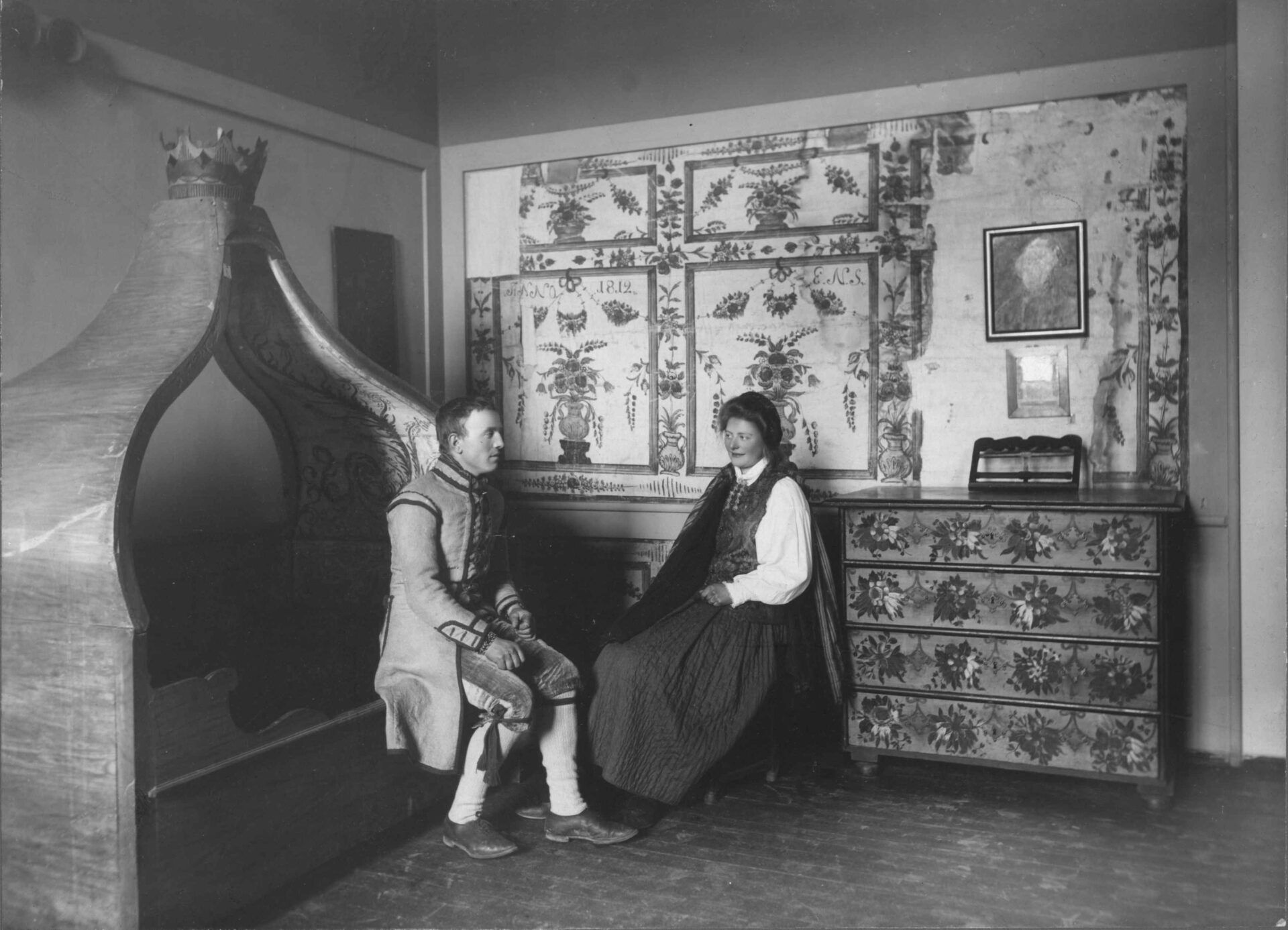
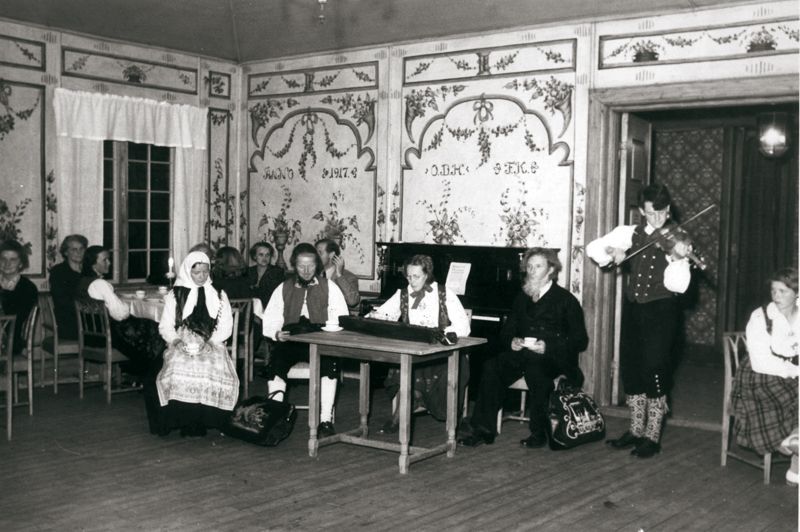
The wallpaper in the Festival Hall was hand-painted by two decorative painters who were both conservators at the Norwegian Ministry of Cultural Heritage during their careers. They were Finn Kraft and Ole Dørge Haug. Their initials still adorn the decoration of the Festival Hall, along with the initials of other important men at the museum, such as the museum's first director, Hans Aall, and architect Poulsson. It is also believed that the other initials represent central Oslo citizens who contributed financially to the museum, the restaurant building and Oslo's cultural life.
For a long time, the museum did not know where the inspiration for the tapestries in the Festival Hall came from, but assumed that they came from a large farm in Dalarne in Sweden. However, in the winter of 2008, two of our conservators found parts of the original tapestries that were used as models for the wall decorations in the Festival Hall. These were found in one of the museum's magazines, with information that the tapestries were from Høland in Akershus and originated in 1812. On the right is this fragment from an early montage with contemporary figures in the image.
The guesthouses have gone through many phases in their over a hundred-year life, and today appear as a beautiful building with a varied history. This history itself is beginning to be listed, and is a good example of how an old building combines preservation and innovation to emerge as an exciting and unique historical medium.
For the Norwegian Folk Museum, it is important that the building is in active use, which makes the past present and relevant in the present.
Our venue is the perfect setting for both intimate gatherings and large-scale events.
Please send us an enquiry and we will get back to you as soon as possible - typically within 24 hours on weekdays. Please note that we do not check emails over weekends or bank holidays.
Email: utleie@norskfolkemuseum.no

utleie@norskfolkemuseum.no
Tel: +47 22 12 36 50
Our venues
Private occasions
Corporate occasions
Seasonal occasions
2025 © Historic premises
| Designed by Fredrikke Bonsaksen and in collaboration with Oase
Oslo
Sæterhytten at Bygdø Kongsgård
Surroundings